
Osceola County Release Archive Gap
The official-domain sweep found no current jail roster, rolling 72-hour view, 24-hour view, or released-person archive for Osceola County, Michigan, as of July 24, 2026. No online cadence, retention window, public field list, or photo policy can be claimed because there is no verified feed. Search results from counties with the same name in Iowa or Florida are not substitutes. The first step is the Michigan Osceola County Sheriff's Department, which lists jail processing and the jail telephone line but no public release-search control.
A three-day check therefore starts with a defined date range. Call the Osceola County Jail at (231) 832-2288 and ask whether the person remains in local custody. If the answer is no, request the exact exit date, time, release type, and receiving agency. Pair that response with the criminal case, a VINE event if available, and the written release or transfer record. This is a reconstruction, not a hidden online list.
Important: No online name is not proof of release. Osceola County has no verified public roster to supply that inference.
The official Sheriff capture identifies the correct Michigan agency for a 72-hour release inquiry.
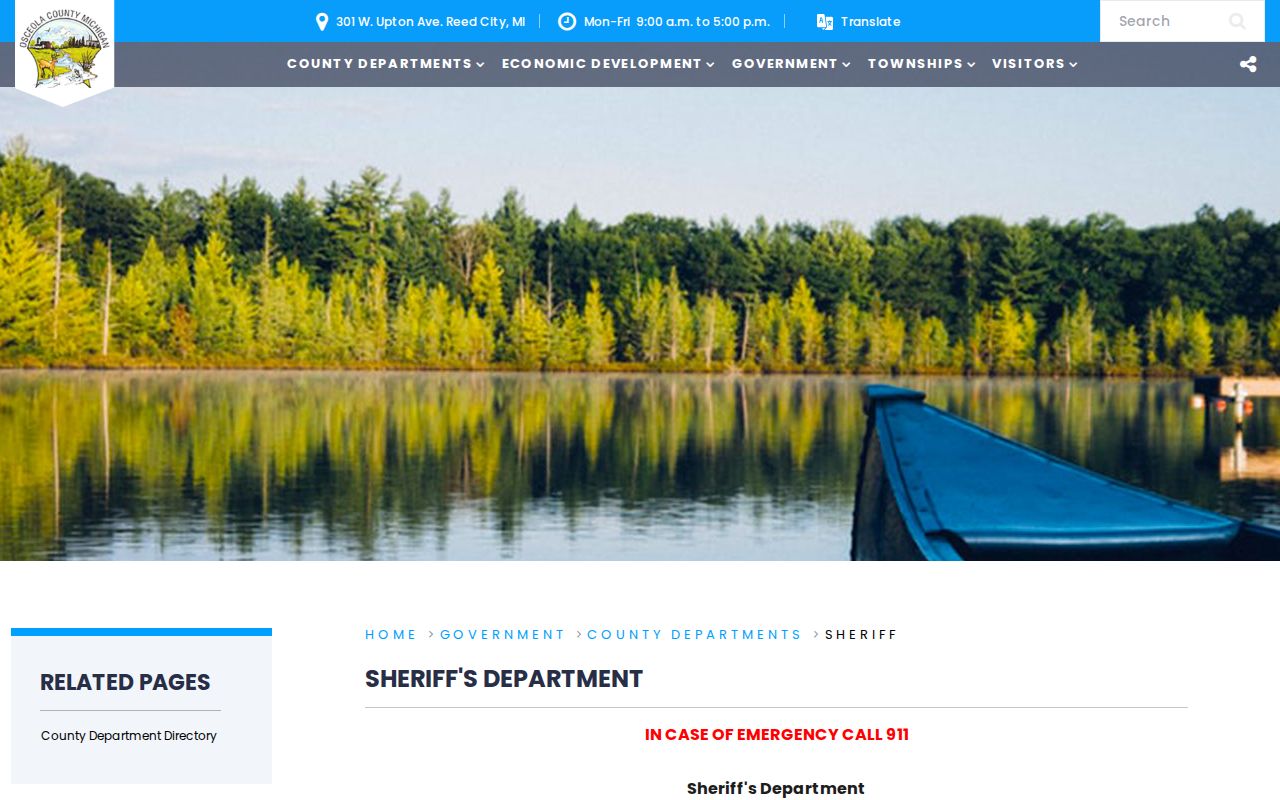
Its lack of a visible recent-release module supports the phone and records-based workflow rather than an invented county feed.
Reconstruct Osceola County 72-Hour Releases
A 72-hour period is not the same as “the last three calendar dates.” Write down the exact start and end times. If the aim is a weekend or holiday span, identify each date included and note when each source was checked. That keeps a court order entered late in one day from being confused with jail processing completed the next day. It also lets the records office search a bounded period instead of guessing what “recent” means.
- Identify the full name, date of birth if known, approximate booking date, and court case number.
- Call the jail and ask for present custody, the exact release time, release type, and destination for the selected three-day span.
- Review the 77th District Court route for bond, misdemeanor, and early felony events. Check 49th Circuit Court for felony disposition and sentencing.
- Search MI-VINE for Michigan and read the exact agency, event, and status label. Do not assume Osceola participation without a returned record.
- Submit a county FOIA request for the release entry, inmate release form, or transfer paper, with the 72-hour range stated in full.
- Follow every transfer to the receiving jail, MDOC, federal, or immigration system before describing the exit as community release.
The Osceola County forms center supplies the official public-record request route. Ask for electronic delivery and the nonexempt parts of the record after any required redaction. A narrow request for the exit event and receiving agency is often more useful than the whole jail jacket.
Note: A bounded date range and case number help the county locate the right release event without relying on a public roster.
Osceola County 72-Hour Release Fields
Since there is no public 72-hour display, the following table is a request and verification checklist. It must not be read as a promise about a feed. Michigan General Schedule 11 uses terms such as booking card, inmate release form, property-release form, transfer-to-prison paper, bond, and warrant when describing an inmate jacket. The retention classification gives a requester precise vocabulary. It does not guarantee that each component is present or fully available under FOIA.
| Field to check | Use in a three-day review |
|---|---|
| Name and date of birth | Confirms identity across jail, court, and VINE sources. |
| Booking or inmate number | Links multiple events to the same Osceola County stay. |
| Booking date | Separates an older jail event from the release under review. |
| Release date and time | Places physical processing inside or outside the exact 72-hour span. |
| Release type | Distinguishes bond, completion, probation, dismissal, or transfer. |
| Destination or receiving agency | Shows whether custody ended or merely moved. |
| Case and charge reference | Connects the jail event with the controlling court action. |
Ask for the value as recorded, not for staff to interpret the whole case. “Released” can describe the end of Osceola County custody even when another agency immediately begins custody. A transfer destination is therefore as important as the time field.
Osceola County Weekend Release Checks
No official Osceola County policy was found for weekend or holiday release processing. The jail's exit door, family waiting rules, release times, and transportation arrangements were also not verified. Do not fill those gaps with practice from another county. Call the jail before travel and ask the question directly when timing or pickup matters.
The reason to use a three-day window is evidentiary, not a claim about local policy. A bond order, dismissal, or sentence event may appear on one date, while physical processing and the jail release form show another. VINE may send an event after its contributing agency updates the record. Offices may also post case information on different schedules. Reviewing the full span reduces the chance that one system's date boundary hides a relevant event.
The 77th District Court page is the local route for bond and early criminal-case information.
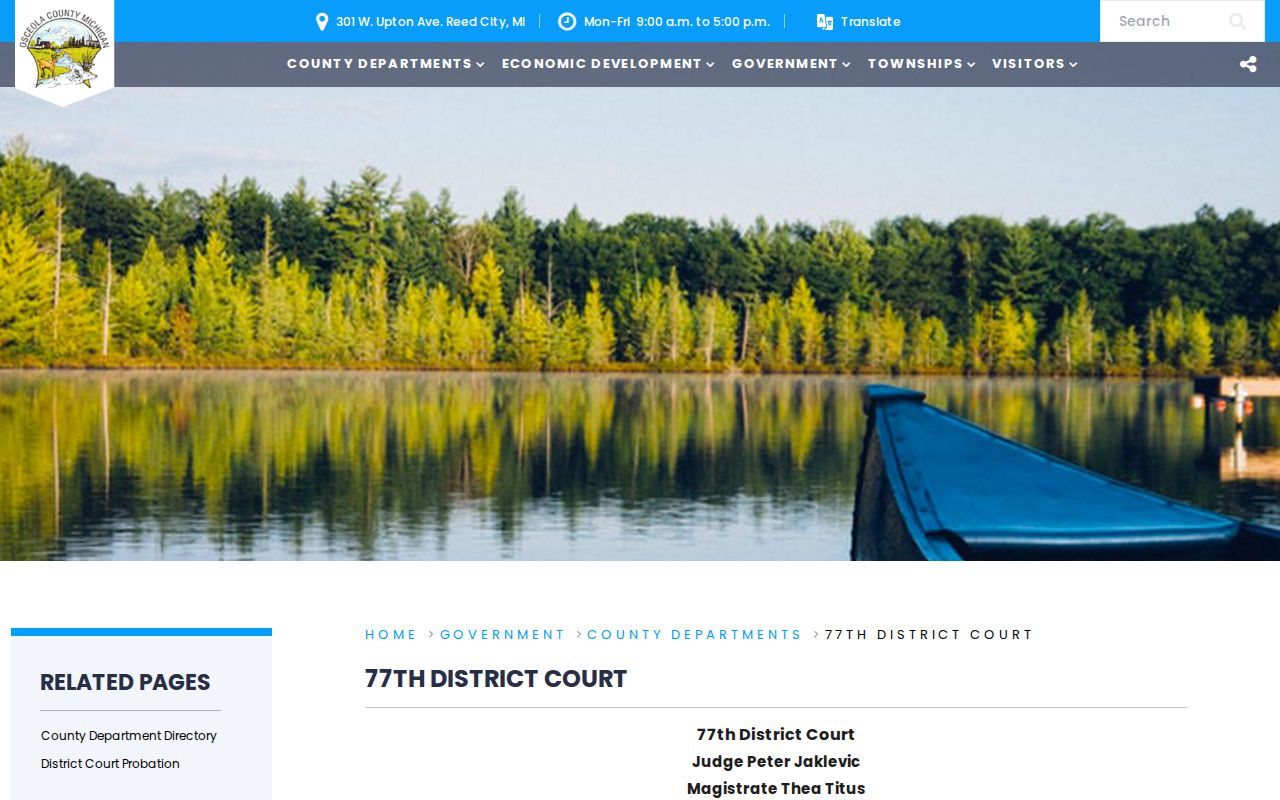
The court source can explain why release became legally possible, while the jail record remains the source for the actual physical exit.
Compare Osceola County Release Events
MI-VINE is useful for comparing custody events across a three-day range, but statewide materials refer to participating county jails. No Osceola-specific participation statement was found. Select Michigan at VINELink, search the person, distinguish matches by identifying details, and open the record tied to the correct agency and booking. Save the exact status wording and event date rather than translating it into a stronger claim.
A VINE transfer alert does not mean release to the community. The feeder record may close or change when custody moves elsewhere. If no record appears, possible reasons include local nonparticipation, spelling, timing, transfer, or a retention limit. Call MI-VINE at 800-770-7657 or the jail rather than treating silence as a final result.
The official Michigan MI-VINE page establishes the notification and custody-verification channel.
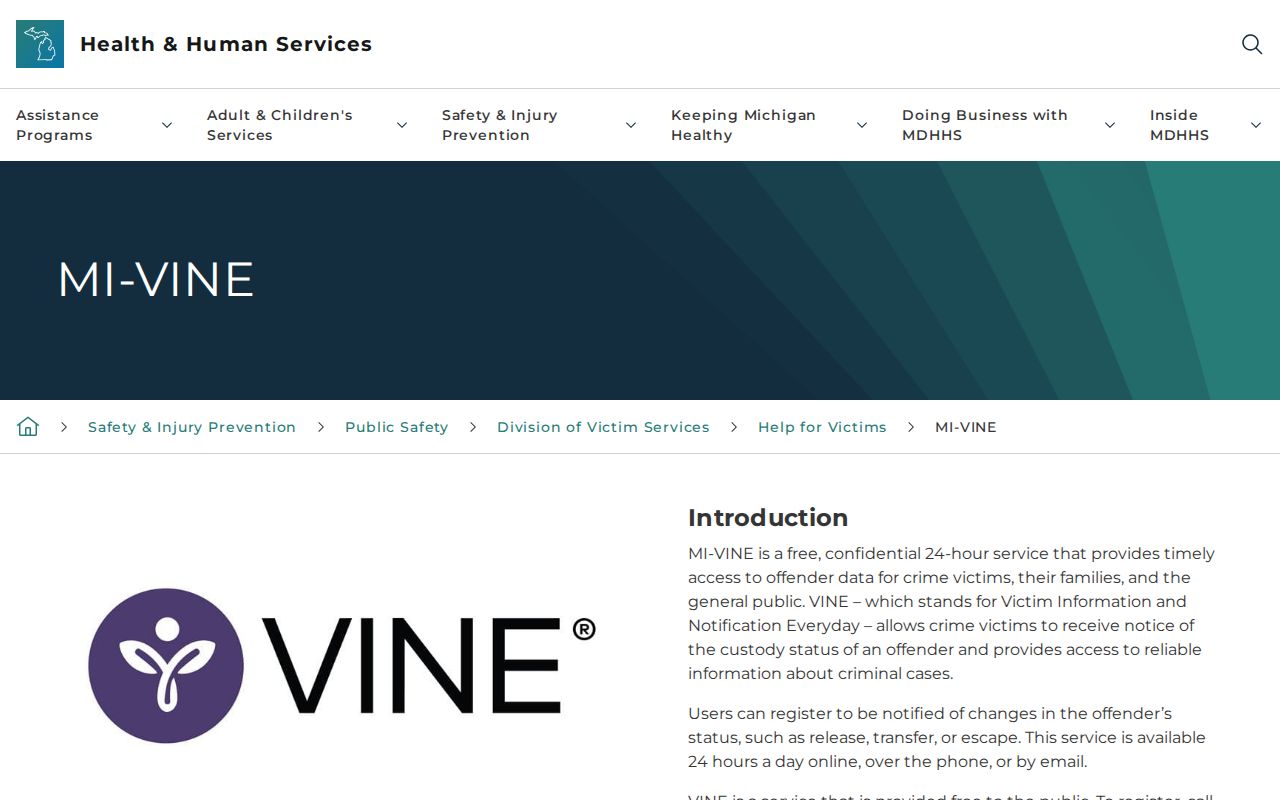
This statewide interface can corroborate a release or transfer event when the specific Osceola County record is covered, but it is not the originating release certificate.
Note: Record the contributing agency because a VINE event has meaning only within the custody system that supplied it.
Trace Osceola County Release Transfers
A transfer is one of the main reasons a 72-hour reconstruction must extend beyond Reed City. Someone can leave the Osceola County Jail for MDOC, another county, a federal holding route, or immigration custody. The local jail release entry marks the end of Osceola custody, not the end of all custody. Ask for the receiving agency field or transfer document, then continue in that agency's system.
| Exit path | Where to continue |
|---|---|
| Community release or bond | Jail release form, court order, and Community Corrections if assigned. |
| Transfer to MDOC | OTIS current status and state facility information. |
| Transfer to another county | Receiving sheriff and the warrant or court trail. |
| Federal transfer | Federal docket and USMS route, then BOP after commitment. |
| Immigration transfer | ICE locator or its assistance line for the applicable record. |
The OTIS search is for state prisoners, parolees, felony probationers, and recent MDOC discharges. It is not an Osceola County jail release list. Change the default active-offender filter when checking a person believed to be on parole or discharged, and read Current Status apart from Earliest Release Date.
Osceola County Release Record Retention
Angle E matters beyond the initial feed gap. A web archive was not found, yet Michigan's approved retention schedule describes records that can last far longer than a recent list. GS11 item 11.210 retains an inmate jacket until release plus ten years and expressly mentions release forms and transfer papers. Booking or control logs follow a separate period. Daily counts and property records follow their own periods. Those rules govern agency retention, not public web posting.
A three-day release event may therefore never appear online while a written Osceola County record remains. FOIA still permits exemptions and redaction, and the schedule does not make every jacket item public. Ask for a focused record, request the separable nonexempt portion, and read any denial or fee notice against the county's posted procedures.
Michigan FOIA generally gives a public body five business days after legal receipt to grant, deny, partly grant, or issue a written extension notice. One extension of up to ten additional business days is available. That is a response timetable, not a guarantee that production will be complete within the same period. Current permitted fees depend on the actual request and county policy, so no fixed Osceola price should be assumed.
Confirm Osceola County Three-Day Releases
The strongest result has three parts: the jail's physical exit event, the court's legal action, and the destination after release. For a state transfer, add the MDOC record. For a VINE event, retain its exact label and source agency. If one part is missing, describe the finding narrowly instead of filling the gap.
A 72-hour review works best for a date range, weekend, or uncertain exit. For events unfolding today, use the Jail Releases: 24 Hours workflow. For an older named-person search that may reach court, state, or federal records, use the Osceola County released-inmate search. Both paths still require the correct custody system.
- Release event
- The recorded end of custody by the agency named in the source.
- Transfer
- A move to another agency, not an unconditional exit.
- Parole
- Physical release from state prison while MDOC supervision continues.
- Discharge
- The end of the displayed sentence or supervision in the system using that label.
Note: Preserve exact dates, times, labels, and agency names so the three-day reconstruction can be checked against the originating records.